
Graphics High readability Text only Cambia lingua
Change is possible

TORINO GREEN AIRPORT

20,0°C | 68,0°F

CREALab – Circular Renewable Energy Area Living Lab

An innovation laboratory for the energy of the future

For several years, SAGAT has been following a structured energy transition path, aimed at optimising energy consumption, developing renewable energy production for self-consumption, and reducing emissions, while fully complying with the safety requirements of a complex infrastructure such as the airport.

Torino Airport currently has around 2 MWp of photovoltaic capacity installed, which can cover up to 17% of its energy consumption under conditions close to full self-sufficiency. At times of peak demand, energy requirements can reach peaks of around 2.5 MW.

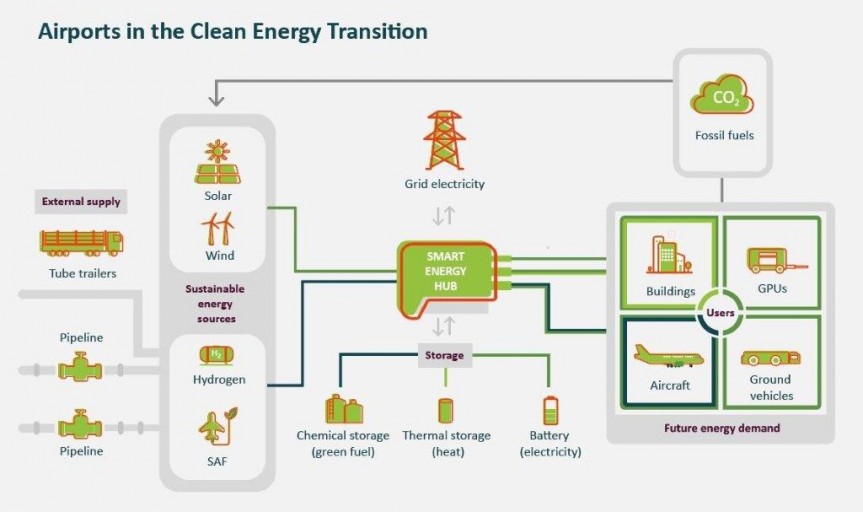
In this context, SAGAT operates both as an end user and as the operator of a Closed Distribution System (CDS), which also supplies the sub-concessionaires operating at the airport. This creates a local energy network that requires efficient, integrated management, with the aim of balancing demand and generation directly within the airport grounds.
Article img

The CREALab project

Within this context, CREALab – the Circular Renewable Energy Area Living Lab – is a project funded under the Mission Innovation 2.0 – Flexibility and Energy Storage programme, which is supported by the Ministry of the Environment and Energy Security.

The aim of the project is to develop and test innovative solutions to further develop the airport’s smart grid, with a particular focus on energy storage systems and the efficient management of energy from renewable sources.

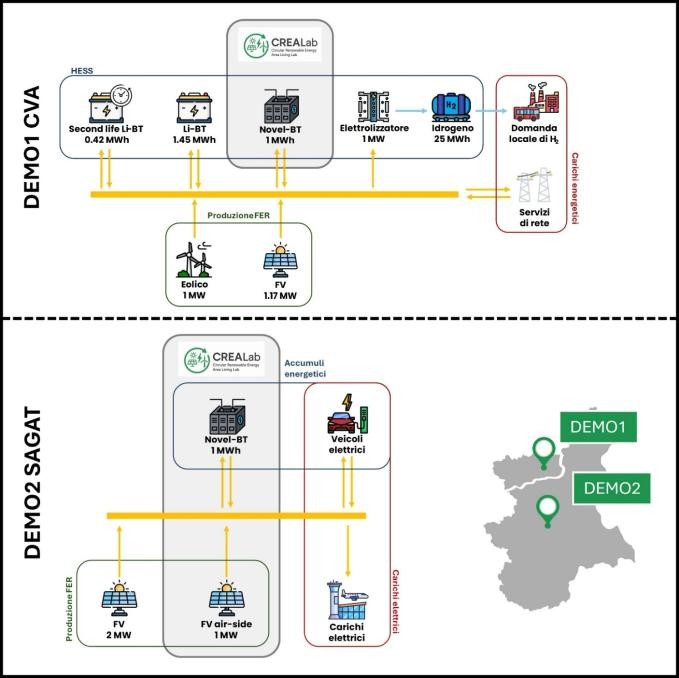
As part of CREALab, a demonstration smart grid will be built, incorporating:
 

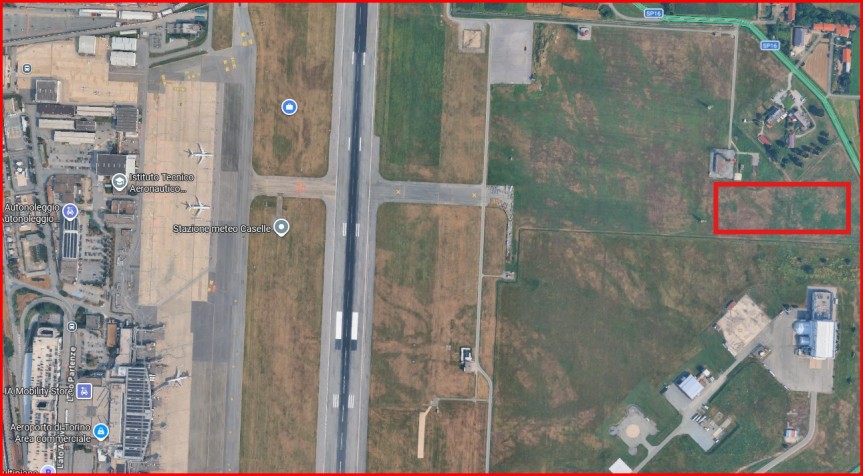
  • A ground-mounted photovoltaic system with a capacity of approximately 1 MWp
  • an innovative 1 MWh storage system based on vanadium oxide batteries
  • Experimental photovoltaic modules with reduced electromagnetic impact, installed alongside conventional modules
     

This configuration will enable an increase in the proportion of energy self-consumed, thereby reducing the need for feed-in to the grid and improving the overall efficiency of the airport’s energy system.

Article img

Technological features

The storage system we have chosen is based on flow batteries, which store energy through reversible electrochemical processes.

Key benefits include:
 

  • Long service life and stability over time
  • Reduced use of critical raw materials
  • Better safety features than conventional batteries
     

The trial will enable us to validate solutions that can expand the installation of photovoltaic systems to areas currently not used, while fully maintaining operational safety standards.

Partnership and a replicable model

CREALab is being developed through a collaboration between industrial, academic and technology partners:
 

  • CVA Group S.p.A. (lead partner)
  • Polytechnic University of Turin
  • Italian Institute of Technology
  • AizoOn Consulting
  • Podium Engineering
  • SAGAT S.p.A.
     

The aim of the initiative is to develop a replicable model that can be applied to other airports and complex infrastructures at both the national and European levels.

Testing and development

The project activities will take place within the airport area, and the project is divided into several operational phases, from defining the models and operating conditions to building the demonstrators and analysing the results in the field, with the aim of assessing their scalability.

Article img

Outlook

CREALab represents a strategic step in Turin Airport's energy transition journey.

The expected results could help to:
 

  • Increasing the energy self-sufficiency of the infrastructure
  • Promote the integration of renewable energy sources
  • Support the decarbonisation of the airport sector
     

Through this project, Torino Airport is strengthening its position as a platform for experimentation and innovation in the development of sustainable energy solutions.